
A Mental Health Check-in: How Are You Doing?
Why Mental Health Awareness Month is a reminder of the power of connection, resilience, and support.
May 17, 2026
There’s been a huge shift during my lifetime in how wetalk about mental health. When I was growing up, it was rarely discussed. Friends who struggled with anxiety or depression often did so in silence, and admitting to a problem was widely seen as a sign of weakness.
It’s painful to think about how muchisolationthat silence caused and how manyrelationships were strained or brokenbecause people felt they had to suffer alone. The less we talked about mental health, the stronger thestigmabecame.
Over time, our culture began to change. Starting in the 1970s, mental health became part of a broader public conversation. Schools introducedprograms, workplaces began payingcloser attention, media coverage expanded, and public figures helped make the issue more visible by sharingtheir own struggles.
All of that has helped make it easier for people to ask for help. Today, resources like crisis hotlines and support groups are more accessible than ever. The stigma has lessened somewhat, too, and that progress is worth recognizing.
But there’s still more work to do. That’s whyMental Health Awareness Monthin May remains so important. It serves as a reminder to keep the conversation going and check in on the people we care about.

Why the work continues
An estimatedone in five adultsexperiences mental illness each year. The causes are complicated and often interconnected, including substance abuse, trauma, financial stress, workplace pressure, and the ordinary challenges of life that can become overwhelming when carried alone.
Loneliness deserves particular attention because it can bothcontribute to mental health challenges and serve as a warning signthat someone is struggling. In recent years, social isolation has become an epidemic across generations and genders. Adults over 45 reporthigher levels of lonelinessthan they did just a few years ago. Younger people are struggling as well, and mennow report lonelinessat slightly higher rates than women.
Research has also shown that social isolation is linked to a greater risk of depression, anxiety, and other serious health conditions. That tells us something important: Connection is part of how we stay well physically and mentally.
Ways to support mental well-being
Each of us has a role to play in supporting mental health. We may not be able to solve every challenge someone is facing, but we can reach out, listen, and remind people they do not have to carry their burdens alone. All we have to do isuse our powerof connection.
Small actions can make a big difference. A phone call, a text, an invitation to coffee, or a simple “How are you doing?” — asked with enough patience to hear the real answer — can help someone feel seen, supported, and less alone. Those gestures can lift our spirits, too.
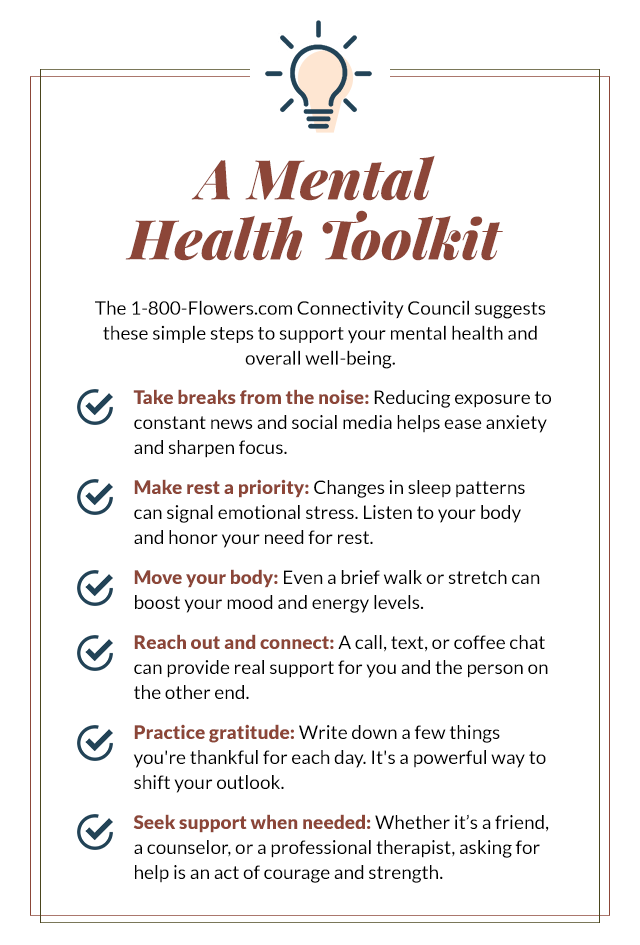
And don’t forget your own mental well-being. Reflecting on what gives life meaning — whether through work, personal growth, or community involvement — can guide you toward stronger relationships and a greater sense of fulfillment.Showing appreciation, offering support, and engaging in meaningful conversations can all help.
What’s more, these qualities reinforce one another. Strong relationships, for example, can build resilience, while a sense of purpose can deepen connections and motivate meaningful action.
Mental Health Awareness Month starts a conversation that deserves to continue well beyond May. Every time we reach out or ask for help ourselves, we push back against the silence that has left too many people suffering alone.
All the best,Jim